
I hold my breath every time I cross the street.
Part of the reason is because a driver waved a gun at me for crossing too slowly. It was 2020 and I’ve spent the time since then constructing reasons for him – everybody was on edge, nobody was okay that year, he wanted to show off his new purhcase. I don’t know if any of those are true for him, but I just know that I still check both ways twice before I step into a crosswalk.
But it wasn’t only him.
Post-COVID, it seemed like just about everyone has to go twenty miles over the speed limit through my neighborhood or else they will lose some type of competition. Seriously, cars were racing through at all hours. It was happening before, but there seemed to be a switch that was turned on. I know full well the risks when I bike to work, but I’d watch with anxiety as my neighbors biked their kids to school which was only a three minute ride. And don’t get me started on the number of times I’d watch drivers glued to their phones as they drove past while I sat on my porch.
Then came the speed bumps. They blanketed non-arterial streets across the country, and when they finally showed up on mine, I felt something that I want to be honest about: relief.
I love my freedom. I say that as someone who knows just how fortunate it is to live in this good ol’ grand experiment called America. And I wanted the government to physically stop my neighbors from driving the way they wanted to drive. I know – The Hypocrisy – I get it. I’m still glad.
That’s the whole argument. It’s sitting in the middle of my street, four inches tall with painted white stripes.
Every side has a cost. Every side has a benefit. There are two sides to every coin.
The question was never whether you believe in freedom. Almost everyone does — right up until the moment someone else’s freedom is doing forty-five past their kid, a block from their house.
So the real question is more complex, and more uncomfortable to ask:
What freedom are you willing to trade for safety?
And, which freedoms won’t you trade, no matter what safety you’re offered?
I gave up the right to drive down my own street however I please so children can walk or ride their bikes safely to school. Easy trade — I’d make it again tomorrow.
But ask me to give up moving through the world unwatched — the Minority Report version, where safety means someone is always looking — and I’m out. Even though it’s the same logic. Even though it would probably work.
I know that’s a little contradictory. But that’s just me being human.
Which brings me to what I actually wanted to write about.
We’re building data centers at a scale that’s hard to comprehend. They need power. They need water for cooling. And the honest accounting has to include what we’re spending it on.
Some of the capacity for data centers is being used on understanding protein folding, genomic language models, materials science, and cancer screening.
And some of it is me asking Nano Banana 2 – Google’s image model, at least for this month – to turn two audio clips into a cartoon children’s book styled like Over the Garden Wall, because it only takes ninety seconds and I was curious.
I’m not going to pretend what I asked Google’s Nano Banana is a crime. I’m also not going to pretend it’s free.
There are nearly 4,800 data centers built or planned in the US. So — slower the pace of building new data centers? Maybe. But that’s a supply-side answer to a demand-side problem.
And the demand is the part nobody wants to look at. Sure, it was fine when we didn’t see the technology companies tracking our every swipe, purchase, and literal move – but now that we see the cameras popping up at every corner and data centers looming behind every subdivision, well – ‘hey, now! Get off my lawn!’
Now it’s time to be real honest: the consumption was never really about the things. Keeping up with the Joneses was never about the Joneses’ lawn or their house or their super cool car. It’s about the identity our stuff lets us claim, and the feeling of being the kind of person who has it. But that feeling doesn’t arrive when the thing does…
It arrives just before. In the anticipation.
That’s not a metaphor. That’s how our brain works. Let’s call it the machinery. The wanting is the product. The having was never the point. Which is why the wanting doesn’t stop when the package does, or when you land your dream job, or when the likes come in on social media, and why we’ve built an economy that is extraordinarily good at manufacturing desire and completely uninterested in manufacturing enough.
Our desire to freely purchase anything and everything we want at a moment’s notice, and have it drone delivered within thirty minutes for the sake of convenience, is costing the thing I’d argue makes us human – the struggle. Facing the hard thing head-on instead of the easiest and quickest way around it. Scape your knee while you’re at it or break a leg – now there is your metaphor.
We asked for guardrails on our streets. We’re a lot less enthusiastic about guardrails on our appetites.
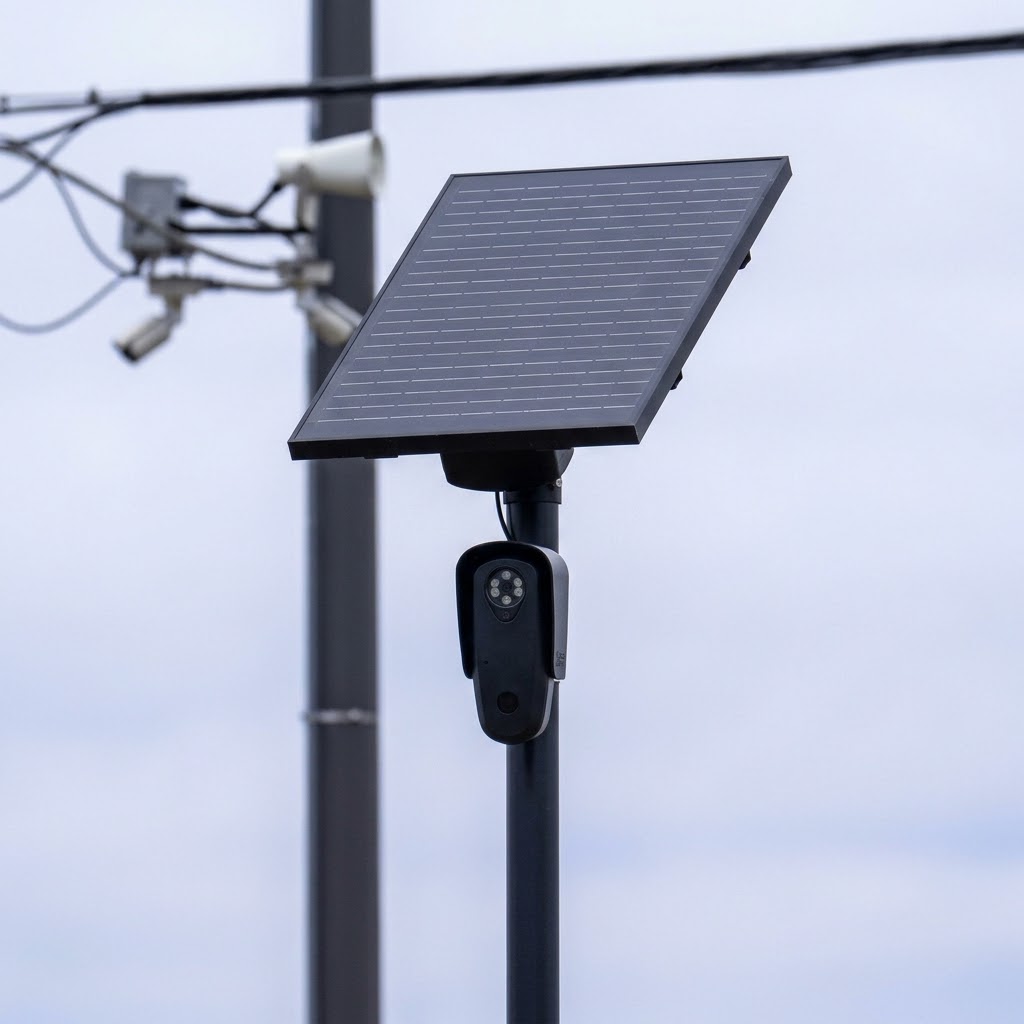
I don’t have this figured out. I’ve got a neighborhood with speed bumps that I’m grateful for, a flock camera at the corner, and a phone I can’t put down – I’m genuinely unsure those are different problems. And the guy with the gun was also, presumably, was just having a bad year.
I’ll eventually work on some newsletter, but until then, swing by in about a month if you find any of this interesting – there is no schedule I’ll pretend to keep, but I’m planning on writing about this roughly once a month — AI, attention, and the reward machinery running underneath both.